
Thursday, September 29, 2011


Batteries, Bulbs, & Wires
Kirsten has a battery and a small bulb. She wonders how many strips of wire she will need to connect the battery and the bulb so that the bulb will light. What is the smallest number of wire strips Kirsten needs to make the bulb light up?
A. One strip of wire.
Explain your thinking about how to light the bulb.
Battery-> wire -> spirally part of bulb -> bump on bottom of bulb -> battery
I can't remember which side +/- it needs to go on.
NSES
Physical Science
Content Standard B: Light, Heat, Electricity, & Magnetism
Benchmark: Electrical circuits require a complete loop through which an electrical current can pass.
Yellow Lab "Explore Together"
Very teacher directed
Detailed outline of procedure.
DOes not provide or ask for an explanation.
Students can be successful, no frustration.
Pink Lab "Explore Independently"
May not successfully discover 3 types of circuits.
Q: See if you can light the bulb. A: Students might say, No, I can't.
Teacher provides engaging Question.
Students explore on their own.
Students experience disequilibrium with any misconceptions.
A. One strip of wire.
Explain your thinking about how to light the bulb.
Battery-> wire -> spirally part of bulb -> bump on bottom of bulb -> battery
I can't remember which side +/- it needs to go on.
NSES
Physical Science
Content Standard B: Light, Heat, Electricity, & Magnetism
Benchmark: Electrical circuits require a complete loop through which an electrical current can pass.
Yellow Lab "Explore Together"
Very teacher directed
Detailed outline of procedure.
DOes not provide or ask for an explanation.
Students can be successful, no frustration.
Pink Lab "Explore Independently"
May not successfully discover 3 types of circuits.
Q: See if you can light the bulb. A: Students might say, No, I can't.
Teacher provides engaging Question.
Students explore on their own.
Students experience disequilibrium with any misconceptions.
Thursday, September 22, 2011
Magnets
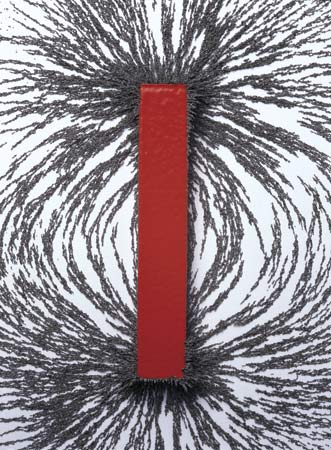
1. What are some "real life" applications of magnetism?
Electromagnetism uses the push and pull of magnets to run things...right? Roller coasters?
2. What experiences have you had with magnets in your life?
I use magnets to pick up tiny metal things (needles, nails). I play with magnets.
3. What ideas do you have about the science of magnets?
Only some metals are magnetic, right? Nickel, iron, and
Magnets have poles. Opposite poles attract. Same poles "push" repel apart
Compasses use magnetic fields. Birds use magnets to know north and south...
That's all I got.
Post-Activity (Learned)
How do the results compare with your predictions? Explain.
I predicted that metallic objects would "channel" the magnetic force. :( And non-metallic items would break field. BUT I know that magnets can "go through" paper, etc. Strong enough magnets can go through your hand. So. I basically guessed.
National Science Education Standards:
Physical Science: Content Standard B Light, Heat, Electricity, & Magnetism
Benchmark: Magnets attract and repel each other and certain kinds of other materials.
Research:
(Source: www.howmagnetswork.com )
History
Magnets were discovered/talked about by the ancient Greeks and Chinese. Greeks thought that magnets or "lodestones" had magical capabilities that attracted iron. They believed that there were islands entirely made of magnetite that pulled in ships by their iron nails; this was one of the explanations for ships lost at sea.
In 1269, Perigrinus wrote the first scientific report of magnetism, trying to understand science over superstition. In 1600, Gilbert figured out that the earth was a giant magnet and that the north and south poles are magnetic poles just like a small magnet. Since simple compasses already existed, this explained why they worked.
In 1820, Oersted discovered that there is a relationship between magnetism and electricity by putting a wire with an electric current near a magnetic compass. The electric current caused a "deflection" of the compass needle. We now know that this is because an electric current (or movement of a charged particle) creates a magnetic field also.
In 1862, Maxwell established the foundation of today's theories of electromagnetism (which I have yet to understand), thirty years before the electron was discovered.
Earth's Magnetic Fields
The geographic "North Pole" of the earth is actually the south pole of earth as a magnet. It is called the north pole because it attracts the north pole of other magnets (opposites attract). Thus the geographic "South Pole" is actually the magnetic north pole of the earth.
Magnets do not actually point perfectly north/south because the magnetic poles are not perfectly lined up with our geographic locations of the poles. This is because the axis of the magnetic field is different than the earth's axis.
Cause: It is now believed that the earth is a giant electromagnet because of a flowing current in the earth's core.
Electromagnetism 101
The "magnetic effect of a current" just means that an electrical current has a magnetic field. (Oersted, 1820) This magnetic effect of a current is called electromagnetism, as oppose to "plain" magnetism of a rock. :)
Tuesday, September 20, 2011
Feature of Inquiry #3
Summary: Learners formulate explanations from evidence to address scientifically oriented questions.
Focus: The path from evidence to explanation.
Scientific explanations based on evidence and logical argument.
Explanations go beyond current knowledge, by building on it to create new understanding.
What would this look like in the classroom?
-Students learn to tell the different between evidence & inference as the teacher asks deeper questions.
-Observed and/or measured data are evidence. Students use science notebooks to record observations.
-Looking at real evidence drives investigation and then solutions/conclusions.
Examples from video:
Evidence-observed phases of the moon. Explanation-none discussed in this lesson
Question-What causes craters? Evidence-Experiment with activity & look at/record results Explanation-may have been final discussion after activity.
Group 3
Danielle
Megan
Megan
Elizabeth
Rebecca
Focus: The path from evidence to explanation.
Scientific explanations based on evidence and logical argument.
Explanations go beyond current knowledge, by building on it to create new understanding.
What would this look like in the classroom?
-Students learn to tell the different between evidence & inference as the teacher asks deeper questions.
-Observed and/or measured data are evidence. Students use science notebooks to record observations.
-Looking at real evidence drives investigation and then solutions/conclusions.
Examples from video:
Evidence-observed phases of the moon. Explanation-none discussed in this lesson
Question-What causes craters? Evidence-Experiment with activity & look at/record results Explanation-may have been final discussion after activity.
Group 3
Danielle
Megan
Megan
Elizabeth
Rebecca
School of the Wild Reflection
Student Learning
I feel that my MM Lesson went well, but I don’t think they were quite ready for the concept of natural selection. I sprinkled MMs in a grassy area before the students came over, and then explained the activity to them I explained that there were MMs or “animals” hidden in the grass and they (the students) were the predators. On my word, the students ran into the grass to find as many MMs as possible before I said, “Predators freeze.” At that point, I asked them to show me and each other the MMs that they found. Unlike my prediction, the bright green MMs had been very easy to find (along with red, orange, etc), but luckily the students had very few brown ones! I compared the brown MMs to well-camouflaged animals and explained that camouflage helped them “survive” the “predators.” I tried to briefly explain the idea that the brown “animals” survived and would have more babies with good camouflage, but the brightly colored ones did not “survive.” The group was fading fast, so I asked for other suggestions of traits that might help animals survive. One student suggested size; large animals will be stronger and win in a fight. I tried to relate his example back to natural selection by reiterating that the large animals would continue to survive and reproduce just like he said, and the weaker animals would not survive. I think the students enjoyed the activity and related it to camouflage, but did not take away any new concepts that they did not previously know.
My Learning
Although natural selection is a pretty high level science concept for sixth graders, I definitely think the fault is mine. They could easily have understood the concept if I had planned better. It seems so obvious now, but since I did not know the students and felt like I had little control over the group, I ended up telling much more than I questioned. It would not have necessarily been an inquiry lesson, but if I had asked students, “How can you relate this to real predators and prey?” or “What will happen to the brown population if this keeps happening? What will happen to the red, orange, and green population? What then? What does this mean?” Even those questions are not excellent because they have rather specific answers I am looking for, but it would have been better than just telling. I also realize that under stress I reverted to teacher-talk instead of engaging the students! This helps me to know that in unfamiliar situations I need to plan, plan, plan. I admit that I did not do that in this case because I “planned” to go with the flow and just have fun with the kids. Which, I guess if that was my goal, we accomplished it. I should have focused myself on a learning goal and decided how I would assess their understanding.
Future Teaching
This short activity helped me to see that Environmental Education is not hard. (It takes planning, but it is not impossible.) Despite my short mini-lesson/activity, I was also able to observe Meredith teaching the students in one of her “outdoor classrooms.” She did tell them some information, but asked a lot of simple questions. She was also not afraid to let kids tell about experiences and share knowledge that they had. By connecting what they had to say (which I would probably have deemed irrelevant), they felt valued and probably made a better connection to what she was teaching about. Braus and Wood point out in Environmental Education in Schools that “in many places, outdoor experiences are not a regular part of instruction; instead of occurring throughout a student’s schooling, outdoor experiences are often limited to a few outings in primary grades” (9). As soon as I read this I instantly knew it to be true. At very best an intermediate or high school teacher might conduct normal class outside on a sunny day. I do prefer to teach early primary grades, but my comfort with upper elementary students is growing, so I may very well be the responsible for creating environmental education opportunities for students who have not experienced it for several years and certainly not in any of their other classes. I agree that environmental education is a beneficial practice, but I am going to need to research and find solid go-to resources and lessons if I am honestly going to implement it.
Braus and Wood also explain that “many educators link environmental education exclusively with science education. …it also requires an understanding of economics, math, geography, ethics, politics and other subjects” (8). It is certainly my tendency to associate the outdoors with science, but I do not know how to truly integrate math with the outdoors. If not measuring and calculating for science exploration or just using outdoor materials for math manipulatives, how would I fully integrate all those subjects with environmental education?
I am somewhat overwhelmed by the whole idea, but I am also relieved that an environmental education is better than none, and I do have the flexibility of cross-curricular application in the outdoors.
Activitymania

I do appreciate that the article gives teachers permission to start modifying activities to be more inquiry-based. However, I feel like this is an article that tells you WHY, not HOW. Ok, I'm a believer! But tell me HOW to modify activities to be more inquiry style. Because frankly, I'm not ready for pure inquiry!
I suppose a good middle ground would be to guide the students in a discussion, and then ask them how we should test it. If they don't have much experience with inquiry, or just want to have a free period, I might have to insist that we are going to test our hypotheses, but I am going to let them choose how. Like the article said though, that only allows for general planning; I might have to run out and buy all sorts of odd materials for their experiment. (Or better yet, "What can we use that we already have at our homes to test our hypotheses?")
Then, when we do an activity it was more student-planned and hopefully more exciting for them since they got to design the activity.
Oh but I do love planning. And organization. And control.
Subscribe to:
Posts (Atom)